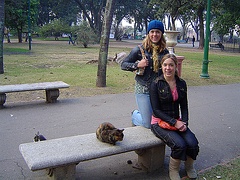
This blog has been quiet for the last couple of weeks while my sister Karen and my 16 year-old twin nieces visited Buenos Aires. Here’s a photo of Kaitlyn and Kacie in Parque Lezama:
Even though they were here for 17 days we still didn’t have a chance to do a lot of the things I had planned. It reminded me of the superficial nature of tourism, that as a tourist you only scratch the surface of a city. Here’s a little summary of their visit:
Day 1: Arrive early morning in Buenos Aires on LAN flight from Miami. Spend day wandering around San Telmo, visiting several churches and Plaza de Mayo.
Day 2: Take the free city tour by bus around Buenos Aires. The tour wasn’t very good but it ended in Belgrano so we had we a good lunch in Barrio Chino. Actually, the bus trip back to San Telmo on the 29 was a much better tour of the city.
Day 3: A day of fog and walking…wandered around Puerto Madero, saw a good exhibition of Molina Campos works at UCA, walked around the microcentro. Since it was Thursday we headed to Plaza de Mayo to see the Madres. Then pizza for lunch followed by a stroll down Av de Mayo to Congreso. After that it was a hike over to Abasto where I left the girls on their own to do some shopping while I attended a book reading group. Afterwards we took the subte back to San Telmo. This was a long day.
Day 4: Recoleta cemetery, then over to Bellas Artes, then over to see the Flower, then the 17 bus home.
Day 5: I collapse with the flu! The girls spend the day in San Telmo.
Day 6: I stay in bed while everyone else heads out on Sunday to the Feria de Mataderos.
Day 7: I remain ill, so the girls explore La Boca then take a taxi over to do some shopping on Florida street and explore Plaza San Martín.
Day 8: This was a Tuesday and I have forgotten what happened this day, probably more shopping and exploring by the girls on their own. My flu is slowly getting better.
Day 9: The girls go to the zoo with Ceci’s mom. (I’m still under the weather). They really liked the zoo.
Day 10: I stay home resting while the girls go shopping in Once with Ceci. In the evening they go to a folclore concert with Ceci’s parents.
Day 11: The girls take the ferry to Colonia for a day trip. I stay home resting for the weekend.
Day 12: I’ve recovered from the flu and we board the bus to Iguazu Falls.
Day 13: Arrive in Iguazu, spend the afternoon exploring the Argentine side of the park.
Day 14: A full day in the Argentine side of the park at Iguazu Falls.
Day 15: Take a bus over to the Brazil side of the park, view the wonderful panorama of the falls from the Brazil side, then head back across the border, then board the bus for the overnight trip back to Buenos Aires.
Day 16: Arrive back in Buenos Aires, a rainy day so we just stay home resting. Late in the afternoon, while I’m sleeping, the girls head out and visit the national history museum next to Parque Lezama.
Day 17: The final day. It’s sunny, thankfully. We hop on the 39 and I take them to El Ateneo on Santa Fe, then we walk around Recoleta, wandering down Av Alvear seeing the fancy buildings, then cross over 9 de Julio. Visit the Isaac Fernandez Blanco museum, wander around Plaza San Martín, stroll down Florida street, cross Plaza de Mayo, then walk down Defensa back home. Have a late lunch at a restaurant next to Parque Lezama then it’s time to take the taxi to Ezeiza. Traffic to EZE is horrible but we make it on time and they fly off to the U.S.
It was a fun trip. It was the first time that my sister or the twins had ever been outside of the U.S. They seemed to have really enjoyed it. I wish I didn’t get sick but they managed fine on their own. Fortunately, I recovered enough to go to Iguazu with them. Their visit reminded me just how much there is to do in Buenos Aires.
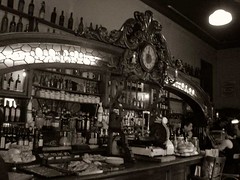
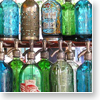 San Telmo: On a Sunday morning San Telmo sometimes seems close to being a tourist trap but the antique fair and the atmosphere still make it worth a visit. I live in San Telmo and if you want to avoid the crowds then come on a weekday. The fair is only on Sundays but San Telmo is worth wandering around on any day of the week. Some of the restaurants around the plaza are overpriced and not very good but stop in at Bar Dorrego on Defensa for a snack.
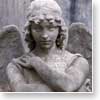 Recoleta Cemetery: Must be one of the great cemeteries of the world. Fascinating to wander among the tombs.
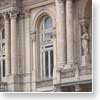 Teatro Colón: The city’s great opera house. Performances are relatively inexpensive but if you’re not into opera or classical music then, at least, take a tour which will show you not only the beautiful auditorium but take you backstage.
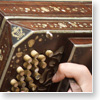 Tango at the Ideal: I don’t dance and I’m not a fan of the fancy tango shows for tourists but I do enjoy watching others dance, particularly ordinary people. The Ideal is one of those old style places with tango dancing on the upper floor. In the afternoons, after the tango lessons, the place will be filled with a mostly older crowd. Even if you don’t go for the dancing, the Ideal is a gorgeous place to eat or have coffee.
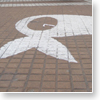 Madres de Plaza de Mayo: Thursday afternoons at 3:30, the mothers of the disappeared still march every week inthe plaza. After their march, which lasts thirty minutes, the madres gather in front of the Casa Rosada for a short speech. It’s worth staying and listening.
 Café Tortoni: the oldest and most beautiful of the cafés in the city. Mostly a tourist spot now but still worth the visit.
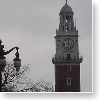 Plaza San Martín: a nice shady area in the heart of the city. Plenty to see and do around there so the plaza makes for a nice place to take a break. Go up to the top of the English Tower for great views and then take a look inside the old train station. Borges lived just a few steps from the plaza.
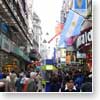 Stroll down calle Florida: not the best shopping and you’re likely to be hounded by touts trying to sell you leather jackets or other overpriced goods but the pedestrian street still has an energetic appeal to it. There are some great buildings in the area. An easy one to explore, since it’s a shopping mall, is Galería Pacifico; the top floor is a cultural center that usually has very good exhibitions. If you’re hungry then the Richmond is an interesting place to stop; it’s one of the places that Borges frequented.
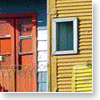 La Boca: Oddly, it’s one of the least desirable neighborhoods in town but it’s also the most touristy. Actually, it’s only one small area of Boca that has found its way into practically every book’s photograph of Buenos Aires. I do think that the picturesque small street of Caminito is a tourist trap (and the tour buses lined up there seem to prove it). The colorful street was the idea of artist Quinquela Martin, whose paintings I think are superb. His nearby house and studio are now a museum of his works and should definitely be visited.
 Fútbol! While we’re talking about Boca, if you’re a football fan (or soccer to those in the US) then a game at Boca is a must. If you’re not a fan of the sport, then you can probably skip this one though it’s still an interesting experience.
 El Ateneo: Simply one of the most incredible bookstores in the world. Located at Av Santa Fe 1860 in a splendidly restored old theater.
 Manzana de las Luces: historic tunnels under 18th century Jesuit buildings.
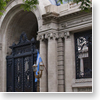 Palacio San Martín: Only a hundred years old but once a massive home for one of Argentina’s wealthiest families. Guided visits on Thursday and Fridays.
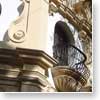 Museo de Arte Hispanoamericano Isaac Fernándex Blanco: nice small collection of Spanish-American art in a lovely neocolonial house.
 Plaza Carlos Pellegrini: the plaza itself is nothing but there are some fantastic buildings here, particularly the two that are now the Brazilian embassy and the French embassy. Walking down Av Alvear towards Recoleta provides a glimpse of the luxurious life in Buenos Aires.
 Palermo Parks & Botanical Gardens: very nice green spaces and a decent zoo.
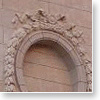 Museo de Arte Decorativo: not necessarily a great collection by any means but a good opportunity to visit what was once one of the country’s grandest single-family homes in the early 20th century.
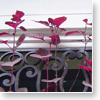 Palermo Viejo: Many people love this area. It’s not really my favorite but worth a visit. Borges was born here though it surely has absolutely no resemblance to the Palermo of his childhood. Still, it’s worth the visit.
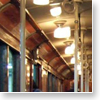 Subte A line: the only subway line in the city that still has the old wooden cars. Board at Perú station and ride out to the Castro Barros stop where you can visit one of the city’s wonderful cafes: Las Violetas at Rivadavia 3899
 Av Corrientes: browsing the many used bookstores on Corrientes in the evening is one of my favorite activities. A crowded street, some decent places to eat, and some very tacky theaters. Zival’s on the corner of Corrientes and Callao is a good place to pick up tango CDs.
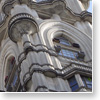 Av de Mayo: the best architecture in the city. Start at Plaza de Mayo and walk towards Congreso. There’s an entire book that discusses nothing but the architecture of this avenue. Take your time and enjoy the scenery.
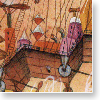 Xul Solar Museum: My favorite museum in Buenos Aires. MALBA is a close second but there’s something mystical about the watercolors of Xul Solar. He’s not very well-known outside of Argentina but I consider him to be a great artist. The museum is in his former home and is itself an excellent renovation, worth visiting if you have any interest in museum spaces.
 MALBA: Museo de Arte Latinoamericano de Buenos Aires has one of the best collections of contemporary Latin American art. The modern building is another great example of architecture for museum spaces. (Ok, in my life in the US I was involved with a couple of library renovations so I pay much more attention to library and museum spaces than the average person!)
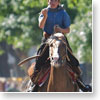 Mataderos: I don’t think many tourists make it out to Mataderos for the Sunday fair. It’s quite a ways out but for those interested in life in rural Argentina and gauchos then it makes for a nice outing.
 Clásica y Moderna: a charming, romantic little cafe, dark wood, quaint bookstore in the back, live music in the evenings. Find it at Callao 892.
 Daytrip to Colonia in Uruguay: board the ferry for the trip to the small, historic Portuguese town of Colonia del Sacramento – a World Heritage site.
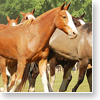 Estancia: Visit an estancia around San Antonio de Areco, spending the night if possible. I usually recommend El Ombú. When we were there two years ago we practically had the place to ourselves. Depending upon when you visit, you might not be so lucky but it’s still small enough that you should find it very enjoyable. There are also many other estancias located around the pampas.
 Boedo: one of the barrios in the southern part of the city that doesn’t get much attention. Boedo is particulary important in the history of tango and literature. Several nice restaurants and cafes in the area.
 Asado and Parrilla: If you’re lucky and know someone living here, you may get invited to asado at a local’s home. Otherwise, you have to try one of Argentina’s famously huge steaks at a parrilla in the city. Generally, I avoid any restaurant that has a stuffed cow at the front door. The small parillas in the barrios are often better than the fancier restaurants but it’s a hit-or-miss effort. I’ve always had a good bife de chorizo at Chiquilin (Sarmiento 1599), a very traditional restaurant. While I don’t go there anymore ($8 pesos for papa fritas is ridiculous), I still recommend it for tourists with US dollars or Euros to spend.